 The Executive
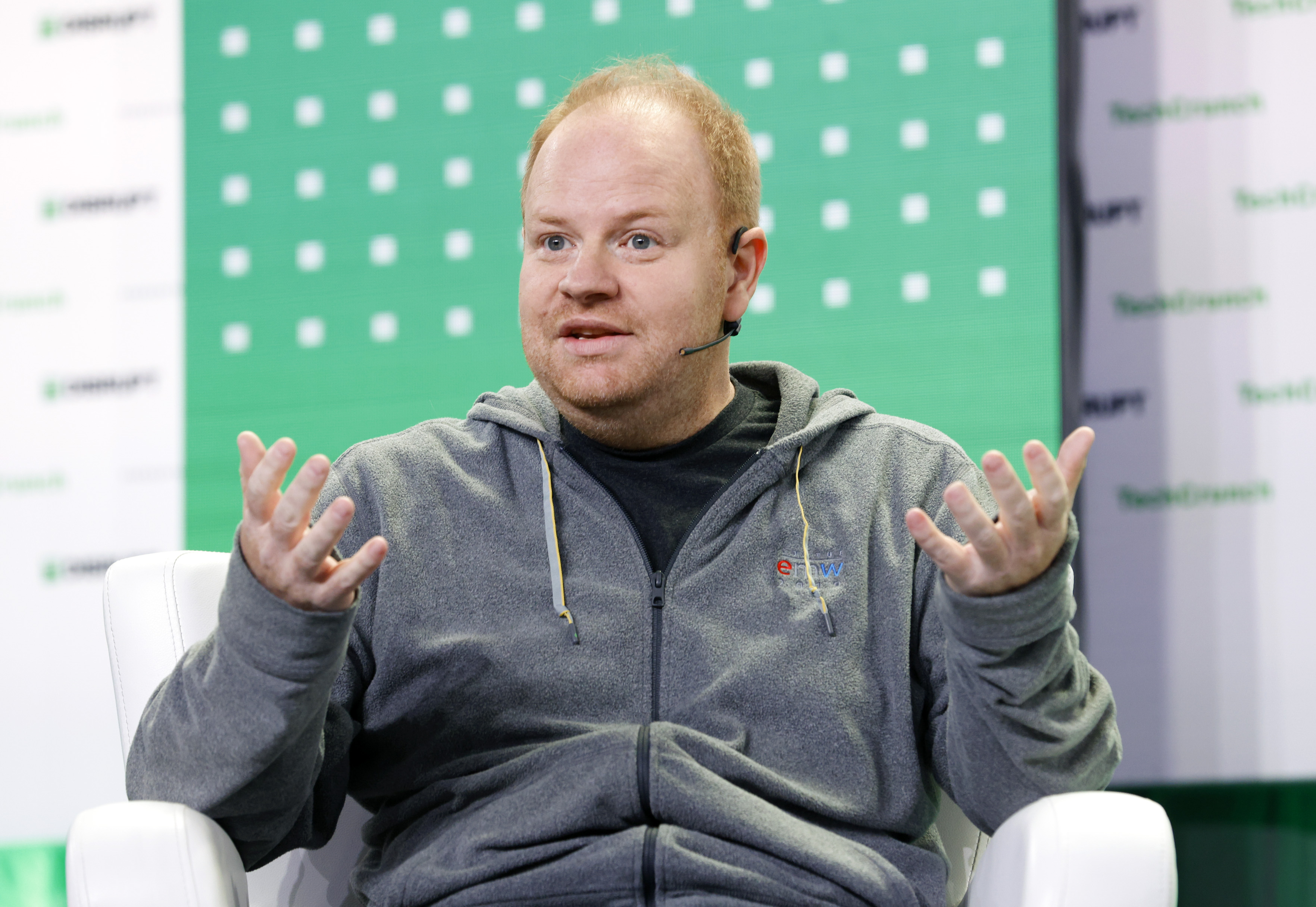
Parker Conrad
The two-time founder behind Rippling has spent a decade arguing that the best software company is not the most focused one, but the most connected one.
The operator behind Rippling
Parker Conrad is the co-founder and chief executive of Rippling, the San Francisco workforce-management company that unifies HR, IT, payroll and finance on a single system of employee data. Rippling's leadership page lists him as Co-Founder and CEO, and the company describes its purpose plainly: it exists to free smart people to work on hard problems. The company says it works from ten offices on four continents and connects with more than 600 other applications.[1]
Few software founders have built two category-defining companies in the same market. Conrad has, and the second is considerably larger than the first. Each is tied to a distinct set of lessons about growth, compliance and product design.[2][5]
Early life and first companies
According to Wikipedia's account, which draws on contemporaneous press, Conrad was born in New York City in 1980, studied at Harvard, where he was managing editor of The Harvard Crimson, and graduated in 2003 with a degree in chemistry. He worked as a product manager at Amgen and, while there, co-founded Wikinvest, later renamed SigFig, a portfolio-management startup for retail investors that launched in 2007. He left in 2012.[2]
Zenefits, and what it taught him
In 2012 Conrad went through Y Combinator and launched Zenefits, an HR platform for small businesses that offered free software and earned money as a health-insurance broker. Wikipedia reports that by 2014 it had about 1,600 employees, 10,000 customers and a 4.5 billion dollar valuation.[2]
Conrad resigned as chief executive on February 8, 2016 after the company was found to have used unlicensed brokers in several states. Fortune reported in June 2016 that Zenefits cut its valuation from 4.5 billion to 2 billion dollars in a repricing of existing stock, and that an investigation found he had written software called Macro to get around state licensing requirements. In October 2017, according to Wikipedia, he agreed to pay an SEC fine without admitting or denying wrongdoing over statements to investors about regulatory compliance.[2][9]
Building Rippling
Conrad began Rippling in 2016, about six weeks after leaving Zenefits, with co-founder Prasanna Sankar as chief technology officer, and spent roughly two years in stealth. It graduated from Y Combinator's winter 2017 batch. Instead of launching one point product, it debuted with payroll and HR, device management, and identity and application management together. TechCrunch reported in 2025 that it offered about two dozen products, including payroll, benefits, single sign-on, bill pay and corporate cards.[2][5][8]
Funding milestones reported by TechCrunch include a 200 million dollar Series F at a 13.4 billion dollar valuation in April 2024 and a 450 million dollar Series G at 16.8 billion dollars in May 2025, which brought total funding to 1.85 billion dollars. New investors included Sands Capital, GIC, Goldman Sachs Growth and Baillie Gifford, and Rippling reported more than 20,000 customers and more than 4,000 employees, with annualized revenue of 570 million dollars according to sources cited by The Information. A July 2026 TechCrunch podcast description says growth has since passed 1 billion dollars in annualized revenue.[5][7]
The SVB weekend
In March 2023, when Silicon Valley Bank failed, payroll funds Rippling had sent through the bank never reached the Federal Reserve. TechCrunch reported that Rippling had to liquidate 130 million dollars in money market funds to cover payroll for roughly 50,000 employees, and that its engineers sent a payments file to JPMorgan about 21 minutes late on Friday afternoon, which the bank waited for.[3]
Conrad began fundraising around 9:30 that morning and signed a term sheet with Greenoaks partner Neil Mehta before 9 that night. The 500 million dollar Series E closed at an 11.25 billion dollar valuation, the same as the prior round, and was structured to be senior to other equity. The funds were wired early the following Monday; the Federal Reserve announced on Sunday that SVB depositors would be fully protected.[3]
The compound startup
Conrad is best known in operator circles for the idea of the compound startup: a company that builds several deeply integrated products in parallel instead of perfecting one. In a conversation published by SaaStr he argued that the conventional wisdom on focus confines companies to crowded niches, that products share core data such as employee records, and that shared components such as reporting, workflow automation and permissions are built once and used everywhere.[8]
He said that starting with one product and planning to add others later rarely works, because the first product absorbs all available time, and that a company wanting to become compound later must nearly refound itself. SaaStr reported that Rippling had 24 products, that most customers start with about seven, that cross-selling alone adds more than 5 million dollars in net new annual recurring revenue each month, and that net dollar retention was 130 percent. He also acknowledged weaknesses: product-launch marketing, explaining what Rippling is, and a fragmented customer experience from multiple sales teams.[8]
How he runs the company
In a 2024 TechCrunch interview Conrad described staying close to the work. He runs Rippling's own payroll, manages benefits and HR policies and approves expense reports over 10 dollars, so he sees the product's flaws firsthand. He reviews recent sales calls, reads support calls and has worked as a support representative. He calls individual stories anecdotal data and considers them more revealing than dashboards, does not believe in managers overseeing other managers, and says founders should master the parts of the business they dislike rather than hiring around them.[4]
AI spend, banking and public markets in 2026
In June 2026 Rippling launched Rippling Data Cloud, a data and analytics product that it says can replace the separate pipeline, warehouse, transformation and dashboard tools companies usually buy, because Rippling already knows each customer's org structure. In his demos, Conrad showed a dashboard that combined Anthropic usage logs, GitHub pull requests and performance ratings to flag high-spend engineers whose code reviews were frequently rejected. He said one employee had spent about 30,000 dollars a year on a calendar and email planning tool, and that Rippling had cut some spending limits and can alert managers or shut off access past a threshold.[6]
TechCrunch reported that Data Cloud costs about 20 dollars a month for the base plan with usage charges for heavy users, that about 560 companies use it, and that it brings in roughly 5 to 7 million dollars of new revenue a month. Conrad said Rippling had moved some workloads from Anthropic to OpenAI as better and more cost effective for its tasks, that the company was about two years from cash-flow positive, and that it spends 45 to 50 percent of revenue on research and development against about 8 to 9 percent at public HR peers. On going public, he said flatly that Rippling is not going public.[6]
On the July 1, 2026 TechCrunch podcast he argued that the value of enterprise AI depends less on more powerful models than on giving AI access to an organization's people data and business systems, and that return on investment, not only productivity, is the measure that will matter. He also discussed Rippling's expansion into banking and its legal dispute with Deel, which began when Rippling sued the rival alleging it had hired an employee to spy on Rippling and which Deel answered with a countersuit in April 2025 denying the allegations.[5][7]
Why he matters
Conrad has turned a disputed exit at his first large company into a decade-long case for building integrated software around a single data model, and Rippling has become one of the most valuable private software companies without an announced path to a listing. His willingness to run the company's own payroll and measure AI spend with the company's own tools is the practical expression of the same thesis: that the hardest business problems cross systems, and the company that owns the shared data can solve them.[1][6][8]
On The Executive List
Parker Conrad is ranked No. 1 on The Executive List (October 2026) in the Chief Executive Officers discipline. The ranking reflects The Executive Review's own editorial Trending Score; it is not an outside award, and placement on the list is never sold. View the October 2026 edition.
Sources
- Rippling - About and leadership
- Wikipedia - Parker Conrad
- TechCrunch (March 17, 2023) - A $500 million term sheet in 12 hours: how Rippling struck a deal as SVB was melting down
- TechCrunch (August 18, 2024) - Rippling's Parker Conrad says founders should go all the way to the ground to run their companies
- TechCrunch (May 9, 2025) - Rippling raises $450M at a $16.8B valuation
- TechCrunch (June 25, 2026) - Parker Conrad knows which employees are worth their AI spend
- TechCrunch podcast (July 1, 2026) - Is your AI actually worth what you're spending? With Parker Conrad
- SaaStr - The compound startup advantage: why the CEO of Rippling believes focus is overrated
- Fortune (June 30, 2016) - Zenefits loses over half of its value
Profile compiled from the public sources above by The Executive Review editors. Last updated 2026-10-23.