 The Executive
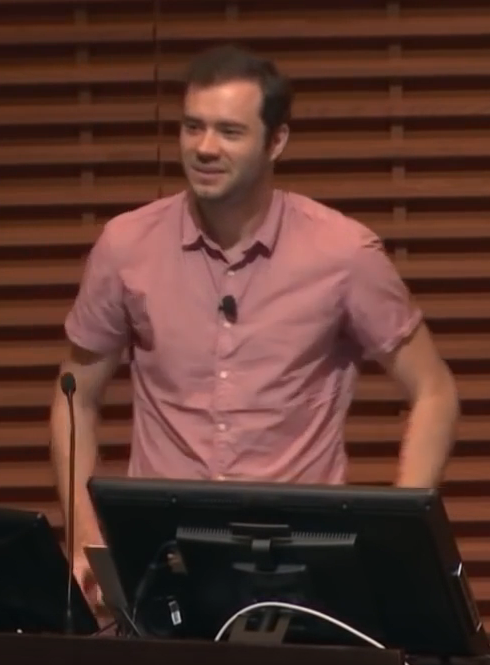
Andrej Karpathy
OpenAI founding member, Tesla's former Director of AI, and one of the most widely followed teachers of deep learning has returned to frontier model research at Anthropic.
Back to the frontier at Anthropic
On May 19, 2026, Andrej Karpathy announced on X that he had joined Anthropic. VentureBeat reported that Anthropic's head of pretraining, Nicholas Joseph, said Karpathy would lead a team that uses Claude to accelerate pretraining research, and that an Anthropic spokesperson confirmed the focus, which ties into the industry goal of AI helping to train its own successors.[1]
The report noted that Karpathy's post said he plans to return to education work in time, which suggests that work is paused for now. It also noted his recent open-source projects, including an automated research tool called autoresearch and a memory system for AI agents called the LLM Knowledge Base.[1]
Education and research
His own site lists a bachelor's degree from the University of Toronto (2005 to 2009) with a double major in computer science and physics and a minor in math, where he first got into deep learning; a master's at the University of British Columbia (2009 to 2011) working with Michiel van de Panne on learning controllers for physically simulated figures; and a PhD at Stanford (2011 to 2015) advised by Fei-Fei Li, focused on convolutional and recurrent neural networks for vision and language. He interned at Google Brain in 2011, Google Research in 2013 and DeepMind in 2015.[2]
His selected publications include a CVPR 2016 oral paper on DenseCap, a CVPR 2015 oral paper on generating image descriptions from visual-semantic alignments, the ImageNet Large Scale Visual Recognition Challenge paper, and a CVPR 2014 oral paper on large-scale video classification with convolutional networks. His earlier projects include the ConvNetJS browser library, the char-rnn language model and the neuraltalk2 image-captioning code.[2]
Teaching at Stanford
At Stanford he designed and was the primary instructor of CS 231n, which the site calls the university's first deep learning course. Enrollment grew from about 150 students in 2015 to 750 in 2017. Alongside it he wrote widely read essays, including The Unreasonable Effectiveness of Recurrent Neural Networks (2015), Software 2.0 (2017) and A Recipe for Training Neural Networks (2019).[2]
OpenAI, Tesla and OpenAI again
His site lists him as a founding member of OpenAI from 2015 to 2017. TechCrunch reported that he joined Tesla in 2017 as director of AI and led the Autopilot vision team. He announced his departure on July 13, 2022 after a four-month leave, calling it a difficult decision after five years, and said he had no concrete plans beyond technical AI work, open source and education. TechCrunch noted that his exit coincided with Tesla laying off 229 data annotation employees and closing its San Mateo office.[2][4][1]
He rejoined OpenAI in 2023 and built a team focused on midtraining and synthetic data generation, then left in 2024, per his site.[2]
Eureka Labs and the public classroom
Eureka Labs, announced in July 2024, is described as building an AI-native school in which a human teacher designs the course material and an AI teaching assistant guides students through it. Its first product is LLM101n, an undergraduate-level course in which students train their own AI. As of the July 16, 2024 announcement the company said it was heads down building that course.[3]
His YouTube work includes the Zero to Hero series for technical viewers and the general-audience Intro to Large Language Models, Deep Dive into LLMs and How I Use LLMs. His GitHub projects include micrograd, a tiny autograd engine with a PyTorch-like interface.[2]
Vibe coding and Software 3.0
In February 2025 Karpathy used the phrase vibe coding for building an app with AI assistance while forgetting that the code exists. CNN reported that Collins Dictionary named vibe coding its 2025 Word of the Year, defining it as the use of AI prompted by natural language to assist with writing code, and credited him with coining it.[5]
In June 2025 he gave a keynote at Y Combinator's AI Startup School in San Francisco. As summarized by Analytics Vidhya, he described three eras of programming: explicit instructions, trained neural networks, and natural-language prompts to large language models. He compared LLMs to utilities, fabs and operating systems, called them people spirits that hallucinate and lack memory across sessions, and argued that partially autonomous apps with an autonomy slider are a major opportunity, framing the coming years as a decade of agents.[6]
Why he matters
Few researchers combine hands-on work at the frontier with a record of explaining the field to a broad audience. Karpathy has worked on the vision stack of a large automaker, been part of OpenAI's founding group and trained a generation of engineers through his course and videos, and he coined a term that entered a dictionary. His move to Anthropic's pretraining effort places him on the work that determines how capable the next generation of models will be.[1][2][5]
On The Executive List
Andrej Karpathy is ranked No. 2 on The Executive List (October 2026) in the Chief Technology Officers discipline. The ranking reflects The Executive Review's own editorial Trending Score; it is not an outside award, and placement on the list is never sold. View the October 2026 edition.
Sources
- VentureBeat (May 2026) - Andrej Karpathy announces he's joining Anthropic
- karpathy.ai - official site
- Eureka Labs - official site
- TechCrunch (July 13, 2022) - Tesla loses top AI executive who led Autopilot vision team
- CNN via KVIA (Nov. 6, 2025) - Vibe coding named Collins Dictionary's word of the year
- Analytics Vidhya (June 2025) - Andrej Karpathy on the rise of Software 3.0
Profile compiled from the public sources above by The Executive Review editors. Last updated 2026-10-23.