 The Executive
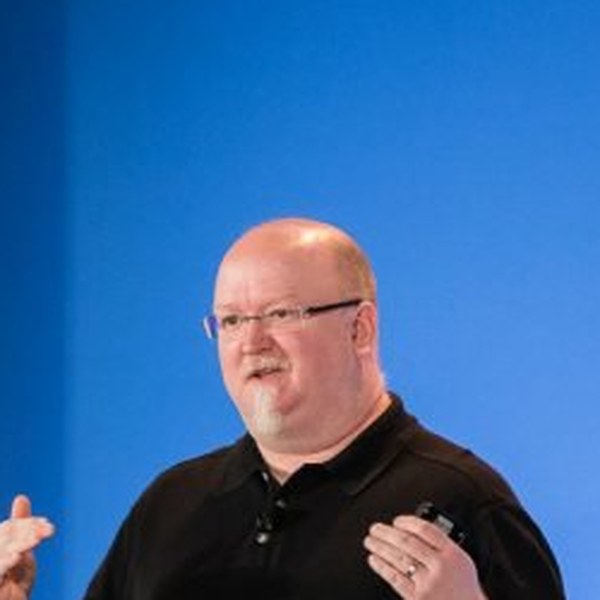
Kevin Scott
Microsoft's CTO since 2017 came up through Google, AdMob and LinkedIn, and is one of the most visible voices on what AI can and cannot yet deliver.
Microsoft's chief technology officer
Kevin Scott is chief technology officer of Microsoft. Microsoft's executive biography says he leads the company's technical vision and works to make Microsoft a strong home for engineers, developers and researchers. Wikipedia's timeline, drawing on Business Insider and Reuters, places his appointment by Satya Nadella in January 2017, shortly after Microsoft acquired LinkedIn, where he had been a senior vice president. It adds that he kept his LinkedIn infrastructure title until September 2017.[1][2]
From academia to Google and AdMob
Scott's career spans about 20 years across academia and industry as a researcher, engineer and leader. He completed a bachelor's degree in computer science at Lynchburg College and a master's in computer science at Wake Forest University, and he did most of a Ph.D. in computer science at the University of Virginia. Microsoft says he co-invented several patents in search and information extraction and wrote publications on dynamic binary rewriting that have been cited hundreds of times. His awards include a Google Founders' Award, an Intel Ph.D. Fellowship and an ACM Recognition of Service Award.[1]
Wikipedia records that he joined Google in 2003, working in search and ads engineering. He became vice president of engineering and operations at the mobile advertising company AdMob in 2007, and when Google bought AdMob in 2010 for $750 million he became senior engineering director of mobile ads engineering. Microsoft's biography describes him at Google as overseeing mobile ads engineering, including the integration of AdMob, and earlier holding leadership roles in search and ads engineering and helping set up early remote engineering centers.[1][2]
Scott joined LinkedIn as senior vice president of engineering in February 2011, according to Wikipedia. Microsoft says he helped build the engineering teams and led the company through its initial public offering and six years of rapid growth. Wikipedia notes that Business Insider called him the engineer who saved LinkedIn after the May 2011 offering, and cites a 2013 Bloomberg account of an internal engineering overhaul there known as Operation InVersion.[1][2]
Book, podcast and civic work
Scott's book Reprogramming the American Dream: From Rural America to Silicon Valley, Making AI Serve Us All, written with Greg Shaw and published by Harper Business in 2020, argues that artificial intelligence should serve everyone rather than a privileged few. He also hosts the podcast Behind the Tech, which features interviews with technology pioneers, and founded a nonprofit of the same name that celebrates the achievements of engineers, scientists and developers.[1][2]
He co-created The Scott Foundation with his wife, Shannon Hunt-Scott, in 2014, and Microsoft lists him as a trustee of the foundation, an emeritus member of the board of trustees of the Anita Borg Institute, and a member of the leadership council of Harvard's Technology for Public Purpose program. He is also an angel investor and adviser to Silicon Valley startups.[1][2]
Boards
Microsoft lists Scott as a member of the board of directors of Shopify. Wikipedia separately records that he joined the board of Stellantis as a non-executive director and member of its ESG committee in January 2021; Microsoft's biography does not mention that seat, so the two sources should be read as covering different dates.[1][2]
What he says about AI in 2026
On the eve of Microsoft Build 2026 in San Francisco, Scott spoke at an event reported by The Letter Two on June 3, 2026. He argued that AI can do more than people currently use it for, and that adoption will not follow model improvements automatically. Fields with fast, automatic feedback loops, such as software development, improve fastest, while slower-feedback fields such as particle physics will move more slowly. Organizations, he said, are slower than software: regulation, legacy systems and resistance to change limit how fast companies can adopt AI, so much of the work ahead is infrastructure and integration.[3]
He also warned that building more with AI does not guarantee the output is useful to anyone else, citing a personal app he judged worthless to others, and that autonomy requires trust: systems must be trustworthy and aligned with users' interests before people will delegate work to them. There is, he said, no silver bullet, so this will take sustained effort.[3]
OpenAI and the 2026 trial
Scott's early role in Microsoft's relationship with OpenAI surfaced in 2026 coverage of the lawsuit brought by Elon Musk against OpenAI. A May 11, 2026 report in the New Straits Times, summarizing court disclosures, described him as having been a skeptic of OpenAI before Microsoft's 2019 investment and reportedly worried that the lab might leave for Amazon. The report did not say he testified.[4]
Why he matters
Scott is one of the executives closest to the technical decisions behind Microsoft's AI strategy: he came from LinkedIn and Google with experience scaling engineering teams, holds Microsoft's top technology title, and is among its most visible public voices on both the promise and the limits of AI. His 2026 remarks reflect a consistent theme in his book and talks: capability matters less than whether organizations and people can use it to create real value.[1][3]
On The Executive List
Kevin Scott is ranked No. 29 on The Executive List (October 2026) in the Chief Technology Officers discipline. The ranking reflects The Executive Review's own editorial Trending Score; it is not an outside award, and placement on the list is never sold. View the October 2026 edition.
Sources
- Microsoft News - Kevin Scott, Chief Technology Officer
- Wikipedia - Kevin Scott (computer scientist)
- The Letter Two (June 3, 2026) - Kevin Scott on why AI capability may not create real value
- New Straits Times (May 11, 2026) - Microsoft boss to testify on his role in OpenAI's founding
Profile compiled from the public sources above by The Executive Review editors. Last updated 2026-10-23.
Photo: Vetala Hawkins and Microsoft, CC BY-SA 4.0, via Wikimedia Commons