 The Executive
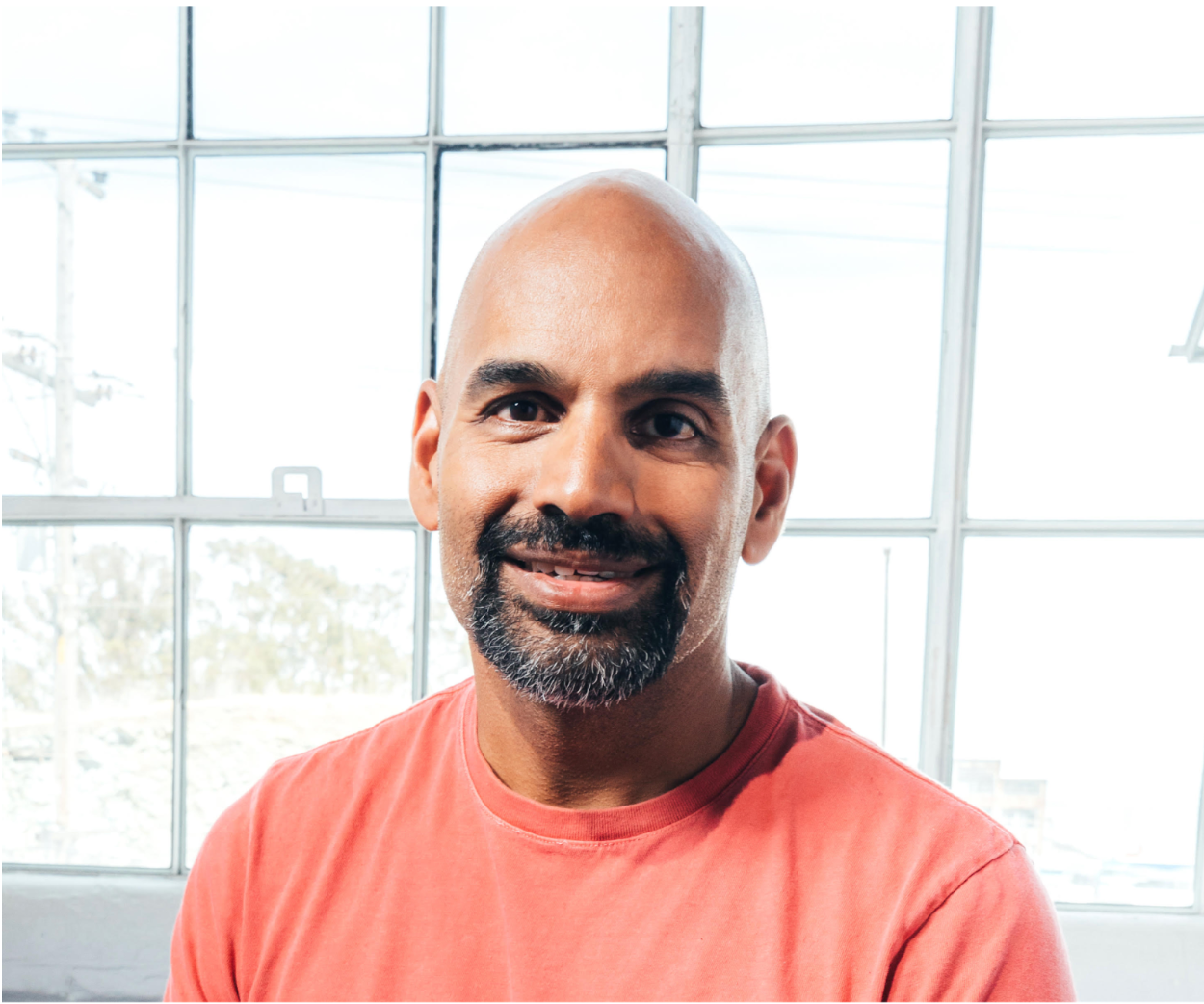
Naveen Rao
The chip architect who sold two companies, Nervana to Intel and MosaicML to Databricks, left Databricks to rethink the foundations of the computer.
A new computer, not a new model
Naveen Rao is the founder of Unconventional AI, a startup building a new type of computer. TechCrunch reported in October 2025 that he left Databricks in September, after more than two years as its vice president of AI, to focus on the company. Rao confirmed the venture publicly, describing its goal as a new substrate for intelligence that is as efficient as biology.[1]
TechCrunch's sources said the company plans to compete with Nvidia by designing an AI machine that combines custom silicon and server infrastructure. The company's own site describes its work as rethinking the foundations of computing to bring biology-scale efficiency to artificial intelligence, and says its founders are experts in AI systems, analog circuits, computing theory and neuroscience.[1][4]
The seed round
In December 2025 Unconventional AI confirmed a 475 million dollar seed round at a 4.5 billion dollar valuation, led by Andreessen Horowitz and Lightspeed, with Lux Capital and DCVC also taking part. TechCrunch described it as a first installment toward a goal of up to 1 billion dollars, and noted that its October report had said the company was seeking a 5 billion dollar valuation, so the final figure came in slightly lower.[1][2]
In October TechCrunch also reported that Databricks was expected to invest and that Rao had already raised hundreds of millions of dollars and planned to raise the rest in installments.[1]
Nervana and the first exit
Rao co-founded Nervana Systems, a machine learning platform company that Intel acquired in 2016 in a deal TechCrunch reports as worth more than 400 million dollars.[1][2]
MosaicML and Databricks
Rao founded MosaicML in 2020 to train and deploy large AI models. On June 26, 2023 Databricks announced a definitive agreement to acquire it for approximately 1.3 billion dollars, including retention packages. Databricks described MosaicML as a generative AI platform that helps enterprises build their own models and noted that its MPT-7B model had been downloaded more than 3.3 million times.[1][3]
In the announcement Rao said MosaicML was founded to make large-scale model training easier for everyone, a mission that had gained urgency with the generative AI boom, and that joining Databricks would bring that goal closer. TechCrunch reports MosaicML had raised 33.7 million dollars before the sale, from investors including Lux Capital, DCVC, Playground Global and Samsung Next.[1][3]
TechCrunch reports that he spent more than two years as Databricks' vice president of AI before leaving in September 2025.[1]
What Unconventional AI has published
The company's blog shows a research agenda built around efficiency. A May 7, 2026 post sets a goal of a 1000x gain in energy efficiency over projected conventional hardware around 2030 for generative AI inference, measured in joules per token or per image at equal output quality. It argues that memory and data movement, not arithmetic, are the main obstacle, and that no single technique will deliver the full gain, so the company would need to combine several smaller factors.[5]
On June 25, 2026 it introduced Un-0, an image generator built on a simulated system of coupled oscillators. Its largest model, with 16,384 oscillators, reaches a Fréchet inception distance of 6.74 on ImageNet at 64 by 64 pixels. The company says this is roughly on par with early conventional generators but behind later ones, and it released weights and code. The post is candid that larger Un-0 models improve with scale more slowly than conventional ones.[6]
Other posts cover analog versus digital computing, an instruction set architecture for hardware that computes with physical dynamics called DS-ISA, introduced June 30, 2026, and sparsity work that removed up to 98.4 percent of Un-0's connections while improving the score. These are company-reported results.[8]
The Unconventional Grant
On September 10, 2026 the company announced the first winners of the Unconventional Grant, a program that funds research questioning assumptions the field has stopped examining. Nearly 100 proposals were submitted and five projects received 100,000 dollars each, from researchers at Stanford, the University of Texas at Austin, Yale, MIT and UC Berkeley. The only requirement is that results be published openly.[7]
Why he matters
Rao has sold two AI infrastructure companies and is now attempting the harder bet of changing the physical basis of AI computation. Whether coupled oscillators, analog circuits or co-designed models can reach the efficiency gains he targets is unproven, and the company's own results so far are at small scale, but his record and the size of the seed round make Unconventional AI one of the best-funded efforts to rethink AI hardware from first principles.[1][2][6]
On The Executive List
Naveen Rao is ranked No. 28 on The Executive List (October 2026) in the Chief Operating Officers discipline. The Executive List edition records him under his former Databricks role; he left in September 2025 and now leads Unconventional AI. The ranking reflects The Executive Review's own editorial Trending Score; it is not an outside award, and placement on the list is never sold. View the October 2026 edition.
Sources
Profile compiled from the public sources above by The Executive Review editors. Last updated 2026-10-23.