 The Executive
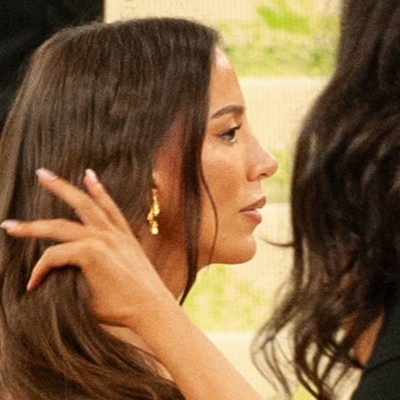
Mira Murati
OpenAI's former chief technology officer, who briefly ran the company during the 2023 leadership crisis, now leads her own frontier AI lab.
A new lab after OpenAI
Mira Murati is the founder and chief executive of Thinking Machines Lab, an artificial intelligence research and product company based in San Francisco. It came out of stealth on February 18, 2025, with a stated aim of making AI systems more widely understood, customizable and generally capable. Its site describes a team of scientists, engineers and builders who have worked on ChatGPT, Character.ai, Mistral's open-weights models and open-source projects including PyTorch, OpenAI Gym, Fairseq and Segment Anything.[1][2][3]
At launch, TechCrunch listed John Schulman, an OpenAI co-founder, as chief scientist and Barret Zoph, who had led model post-training at OpenAI, as chief technology officer, and counted 29 employees from firms including OpenAI, Character.ai and Google DeepMind. The company said it intended to build multimodal systems that work with people collaboratively and to make safety a core focus.[3]
From Albania to Tesla and Leap Motion
Fortune reports that Murati was born on December 16, 1988 in Vlore, Albania, to parents who were high school literature teachers, and that she excelled at math and science olympiads. At 16 she won a United World Colleges scholarship to Pearson College on Vancouver Island. She earned a mathematics degree at Colby College in 2011 and a mechanical engineering degree from Dartmouth's Thayer School in 2012.[4]
Her early jobs were a summer analyst internship at Goldman Sachs in Tokyo in 2011 and a role as an advanced concepts engineer at Zodiac Aerospace. In 2013 she joined Tesla as a senior product manager on the Model X program. From 2016 to 2018 she was vice president of product and engineering at Leap Motion, a startup focused on human-computer interaction.[4]
Six and a half years at OpenAI
Murati joined OpenAI in June 2018 as vice president of applied AI and partnerships, was promoted in 2020 to senior vice president of research, product and partnerships, and became chief technology officer in 2022. In that role Fortune says she oversaw the teams behind ChatGPT, DALL-E, Codex and Sora.[4]
In November 2023 she served three days as interim chief executive after the board removed Sam Altman, then returned to the technology chief role when he was reinstated. On September 25, 2024 she announced in a post on X that she was leaving, saying that although there is never an ideal time to leave a place she cares about, the timing felt right and she wanted to pursue her own independent work. TechCrunch put her tenure at about six and a half years.[4][5]
Funding and the first product, Tinker
On July 15, 2025 TechCrunch reported that Thinking Machines had closed a 2 billion dollar seed round led by Andreessen Horowitz at a valuation of 12 billion dollars, with Nvidia, Accel, ServiceNow, Cisco, AMD and Jane Street also participating. Murati said at the time that the first product would include a significant open source offering and that the company would share its best science to help researchers understand frontier AI systems.[6]
The company launched that product, Tinker, on October 1, 2025. Tinker is a post-training API that lets users fine-tune models on their own data without managing GPUs or training infrastructure, with users keeping control of their data and training loop. In its one-year review the company said Tinker launched with 14 text-only models from Qwen and Llama, has added more than 20 since, and now spans models from about 4 billion to 1 trillion parameters.[2][7]
The company cites customer examples. Glean trained a custom search agent on production tool-use traces and reported roughly twice the speed and 25 percent fewer tokens with no quality loss. A text-to-SQL model built by Bridgewater with the University of Illinois Urbana-Champaign reportedly beat two frontier models at about 15 percent of their cost. These results are the company's own reports of customer outcomes.[7]
NVIDIA partnership and the Inkling models
On March 10, 2026 Thinking Machines and NVIDIA announced a multi-year strategic partnership covering at least one gigawatt of NVIDIA's next-generation Vera Rubin systems, with deployment targeted for early the following year. NVIDIA also made a significant investment of an undisclosed amount. The compute is meant to support frontier model training and platforms for customizable AI at scale.[8]
On July 15, 2026 the company released Inkling, an open-weights mixture-of-experts model with 975 billion total parameters, 41 billion active, and a context window of up to one million tokens, pretrained on 45 trillion tokens of text, images, audio and video. The company is candid that Inkling is not the strongest overall model available, positioning it instead as a base for fine-tuning on Tinker, with weights on Hugging Face. It introduced a smaller model, Inkling-Small, with 276 billion parameters, on July 30, 2026.[2][9]
Team turnover
The lab has lost senior people. The company's co-founder Andrew Tulloch left for Meta in October 2025, and on January 14, 2026 TechCrunch reported that Murati had parted ways with Zoph and that Luke Metz and Sam Schoenholz were returning to OpenAI. Murati named Soumith Chintala as the new CTO, calling him a brilliant and seasoned leader. TechCrunch described the departures as a significant setback for a startup founded less than a year earlier, and reported that Wired had said the split with Zoph was not amicable.[10]
Leadership and public positions
Fortune describes Murati as a leader who charts her own course, noting that she turned down large recruitment offers from Meta, which it reads as a sign of team loyalty. She has argued for responsible development of AI and for input from regulators and governments beyond the technology industry, and has framed the aim of Thinking Machines as distributing AI as widely as possible, as an extension of individual agency. Fortune also records that her 2024 remark that some creative jobs might disappear drew backlash.[4]
Why she matters
Murati is one of the few executives who ran product and research at a leading AI lab through its most public crisis and then raised billions to start a competitor. Her company's bet, that customization on top of open-weight models will matter as much as the largest closed model, is now backed by a major chip partner, a shipped product with named customers and its own open model, which makes Thinking Machines a closely watched test of that thesis.[2][6][8]
On The Executive List
Mira Murati is ranked No. 12 on The Executive List (October 2026) in the Chief Technology Officers discipline. The Executive List edition records her under her former OpenAI role; she is now founder and chief executive of Thinking Machines Lab. The ranking reflects The Executive Review's own editorial Trending Score; it is not an outside award, and placement on the list is never sold. View the October 2026 edition.
Sources
- Thinking Machines Lab - Home
- Thinking Machines Lab - News
- TechCrunch (February 18, 2025) - Thinking Machines Lab is ex-OpenAI CTO Mira Murati's new startup
- Fortune (October 3, 2025) - Meet Mira Murati, the tech prodigy behind Thinking Machines Lab
- TechCrunch (September 25, 2024) - OpenAI CTO Mira Murati says she's leaving the company
- TechCrunch (July 15, 2025) - Mira Murati's Thinking Machines Lab is worth $12B in seed round
- Thinking Machines Lab - One Year of Tinker
- Thinking Machines Lab (March 10, 2026) - NVIDIA long-term gigawatt-scale strategic partnership
- Thinking Machines Lab (July 15, 2026) - Inkling: Our Open-Weights Model
- TechCrunch (January 14, 2026) - Thinking Machines Lab is losing two of its co-founders to OpenAI
Profile compiled from the public sources above by The Executive Review editors. Last updated 2026-10-23.