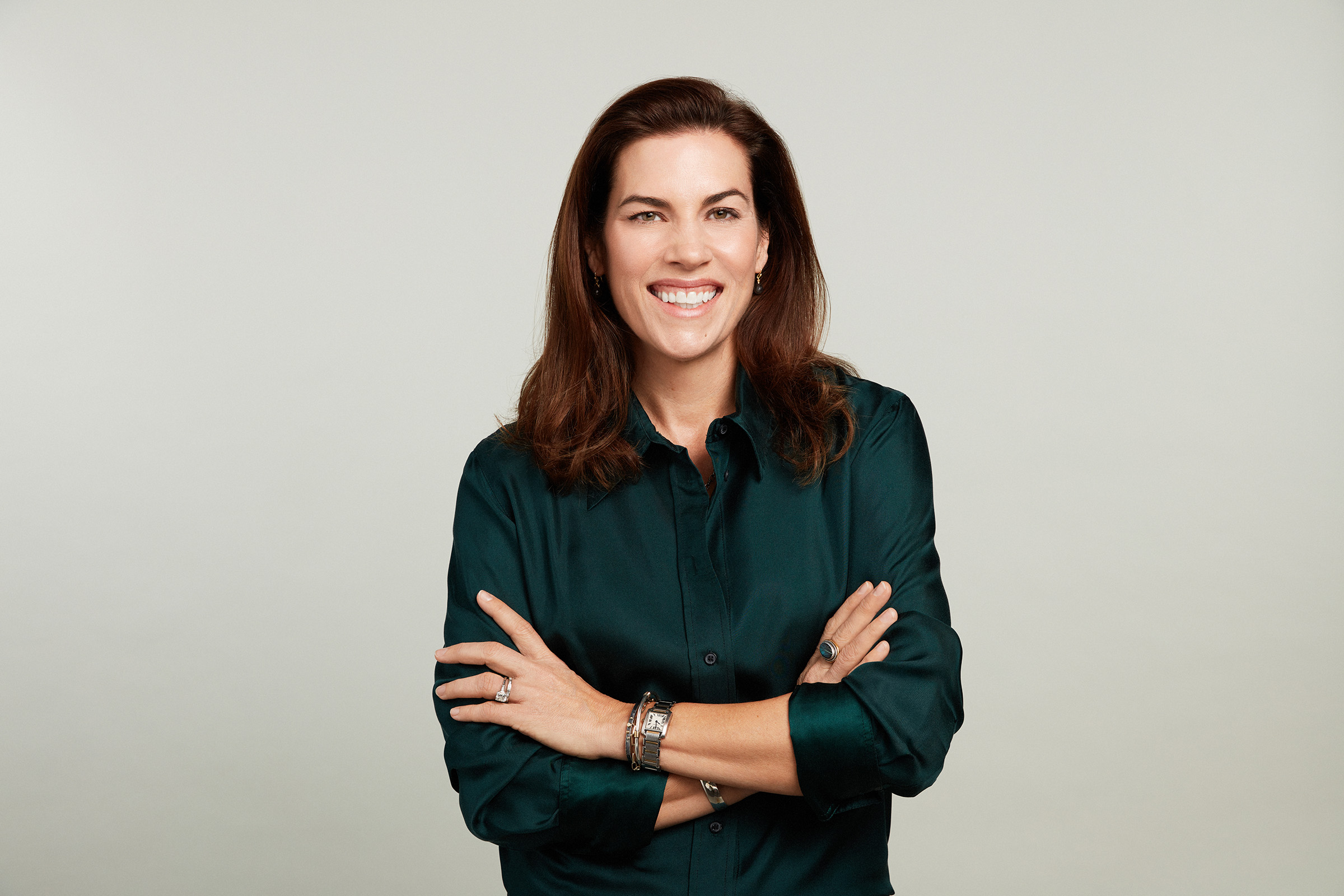
 The Executive
Nenshad Bardoliwalla
The Paxata co-founder and former DataRobot chief product officer now leads AI products at ServiceNow, where he is shaping how enterprises govern AI agents.
AI products at ServiceNow
Nenshad Bardoliwalla is Senior Vice President of AI Products at ServiceNow, as described in coverage of the company's October 2026 AI Passport announcement. An earlier report, on the February 2026 launch of ServiceNow's Autonomous Workforce, gave his title as group vice president of product management for AI products, and the sources do not say when or whether his title changed in between.[1][2][3]
AI Passport: identity and limits for AI agents
On October 15, 2026 ServiceNow announced AI Passport as a capability within its renamed Super Intelligence Control Tower. Each AI agent receives a cryptographically signed credential that defines its identity, what it may do, which systems it may access and who is accountable for it. Limits are checked each time the agent tries to act, not only when it is set up, and the permissions draw on ServiceNow's configuration management database, governance policies and workflow approvals.[1][2]
In ServiceNow's demonstration, an administrator set a 25 dollar limit on a refunds agent. An 18 dollar refund was approved automatically, while a 40 dollar request was blocked and routed for human review. The company says AI Passport uses open specifications so other governance products, identity providers and enforcement systems can issue and verify credentials, including for third-party agents.[1][2]
NVIDIA is the first launch and design partner, connecting AI Passport to its Open Agent Safety Platform so that policies are enforced where agents run. ServiceNow said the feature is expected later in the fourth quarter of 2026, alongside shadow AI detection and AI cost management, with pricing that combines seat-based licenses and bundled AI credits called assists.[1][2]
His argument: governance as a dimmer switch
Bardoliwalla argued that a kill switch is only useful once there is an established baseline of normal behavior against which to judge an agent, and that without such a runtime baseline guardrails are merely advisory. He said the goal is to find and deactivate an agent acting outside its authorized role, not to take all systems offline.[1][2]
He described governance as graduated, saying in a quote reported by diginomica that real governance is more like a dimmer switch than an on-off switch. In practice, according to Tech Times, teams can monitor an agent, pause it by revoking session tokens, restrict it to approved tools and endpoints, and deactivate it by revoking its credentials, with deactivated agents restorable and a recorded explanation. He also argued that ServiceNow's combination of discovery, observability, governance, security and cost-and-value measurement, built on business data it already models, gives it an advantage over point products.[1][2]
Autonomous Workforce and EmployeeWorks
In February 2026 ServiceNow announced Autonomous Workforce, a set of AI specialists that handle routine work within defined roles and enterprise policies while humans remain accountable for oversight. The first, a Level 1 Service Desk AI Specialist, was slated for the second quarter of 2026 and is meant to resolve issues such as password resets, software access and network troubleshooting, escalating to a person only when it cannot.[3]
Bardoliwalla contrasted these specialists with traditional bots, saying bots were built to follow scripts whereas the specialists are not following a script and can reason across systems, handle exceptions and improve over time. The same announcement introduced EmployeeWorks, a conversational AI and enterprise search portal built on the Moveworks acquisition that works inside tools such as Slack and Microsoft Teams and supports the MCP and A2A protocols.[3]
Paxata
Before ServiceNow, Bardoliwalla was co-founder and chief product officer of Paxata, a data preparation company. TechCrunch described Paxata as a platform that fills the data-prep gap in machine learning workflows, based in Redwood City, California, with roughly 100 employees and 90 million dollars in funding raised before it was acquired.[4][5]
DataRobot announced on December 12, 2019 that it would acquire Paxata, which would continue as a standalone product while being integrated into DataRobot's platform. The purchase price was not disclosed, and Paxata's chief executive Prakash Nanduri said the deal would let the company rapidly increase the number of customers able to go from data to value.[5]
DataRobot
DataRobot's 2021 announcement says Bardoliwalla joined the company in early 2020 through the Paxata acquisition and served as senior vice president of product and customer experience. On October 19, 2021 DataRobot named him chief product officer, responsible for product strategy and the roadmap.[4]
The announcement credits him with helping develop the platform and leading the launch of several products, including Composable ML, Continuous AI, Pipelines, No-Code App Builder and Decision Flows, and with driving the creation of DataRobot AI Cloud, a unified AI platform. DataRobot's chief executive Dan Wright described him as combining deep domain knowledge, technical skill and a strong focus on customers.[4]
Why he matters
Bardoliwalla has worked on each stage of the enterprise data and AI stack: data preparation at Paxata, model operations at DataRobot, and now agent governance at ServiceNow. His public position, that agent controls should be graduated and grounded in business context and a measured baseline, is shaping one of the first commercial attempts to give enterprise AI agents verifiable identities. AI Passport had not shipped as of the October announcement, so its real-world effectiveness remains to be shown.[1][2][4]
On The Executive List
Nenshad Bardoliwalla is ranked No. 34 on The Executive List (October 2026) in the Chief Data Officers discipline. The ranking reflects The Executive Review's own editorial Trending Score; it is not an outside award, and placement on the list is never sold. View the October 2026 edition.
Sources
- diginomica (October 15, 2026) - ServiceNow announces AI Passport
- Tech Times (October 16, 2026) - ServiceNow gives enterprise AI agents cryptographic IDs
- The Letter Two (February 26, 2026) - ServiceNow unveils Autonomous Workforce and EmployeeWorks AI
- DataRobot press release (October 19, 2021) - DataRobot names Nenshad Bardoliwalla as Chief Product Officer
- TechCrunch (December 12, 2019) - DataRobot to acquire data prep startup Paxata
Profile compiled from the public sources above by The Executive Review editors. Last updated 2026-10-23.