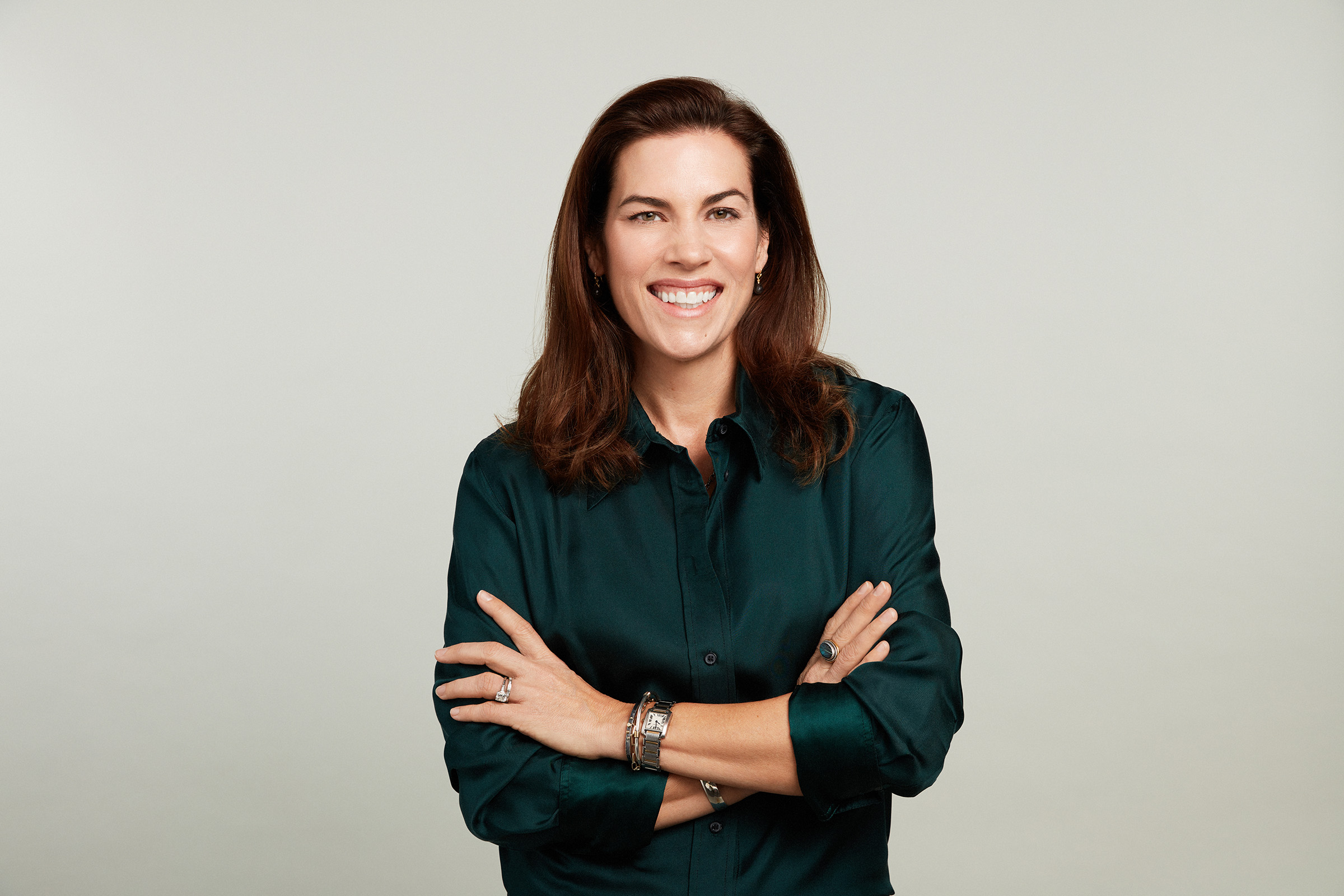
 The Executive

Melanie Perkins
She was turned down by more than 100 investors before Canva launched. It is now valued at $42 billion and resetting its AI economics ahead of a possible U.S. listing.
The founder behind Canva
Melanie Perkins is the co-founder and chief executive of Canva, the Australian design and publishing platform. Fortune ranked her No. 14 on its 2026 Most Powerful Women Asia list and described Canva as the highest-valued female-founded and female-led startup in the world, last valued at 42 billion dollars and working toward a U.S. stock-market listing.[1]
Fortune reports that Canva ended 2025 with monthly active users up 20 percent to 265 million and eight consecutive years of profitability. In an earlier August 2025 report, Fortune put annualized revenue at 3.3 billion dollars, with 240 million monthly users, 27 million of them paying, at the time of an employee share sale that valued the company at 42 billion dollars.[1][3]
Perth, design tutoring and Fusion Books
Fortune's long-form interview describes Perkins as a middle child of an Australian mother and a Malaysian father who grew up in Perth doing figure skating and school problem-solving competitions, and who studied arts and commerce at the University of Western Australia. She met her future husband and Canva co-founder Cliff Obrecht in Perth in 2005.[2]
In 2007, while teaching design to fellow students, she found tools such as Adobe InDesign clunky and expensive, an observation the same account treats as the seed of Canva. She and Obrecht then launched Fusion Books, a yearbook business that Fortune dates to 2011, built on a contracted technology team and a web-based editor sold to Australian high schools. At its peak it published yearbooks for about 400 schools, and the founders treated it as a stepping stone because the market limited its growth.[2]
More than 100 rejections
In 2012 Perkins moved to San Francisco and stayed with her brother while pitching venture capitalists, and she heard more than 100 rejections. According to Fortune, the common objections were reluctance to back romantically involved co-founders, little interest in an Australian company, and doubts about their technical expertise and elite-university credentials.[2]
The breakthrough came through Blackbird Ventures. Perkins and Obrecht met Blackbird's Rick Baker at a gathering of kitesurfing enthusiasts in Maui, spending nearly half their business bank account to attend. Fortune reports that Blackbird became the first major firm to invest, putting in 1.3 million dollars alongside a matching Australian government grant. Investors also wanted a technical co-founder, so Cameron Adams, a former Google engineer and designer, joined as chief product officer, and after advice to name one leader, Perkins became CEO.[2]
Building the product, step by step
Canva's original idea was a template-based design platform called Canvas Chef, and the name was shortened after the canvas.com domain proved unavailable. The company moved from Perth to Sydney to find technical and startup talent. Fortune dates the first design tool to 2013, a six-language expansion to 2016, a 2017 back-end rewrite that stalled new features for about two years, video editing in 2021 and a work suite including Docs, whiteboards and a website builder in 2022.[2]
By 2022 Fortune counted about 3,200 employees, about 10 million paying subscribers and revenue just above 1 billion dollars for 2021, with free-cash-flow profitability every year since 2017. Perkins described her approach in that interview as building one piece at a time, choosing a single annual priority from the broader vision, and being willing to delay a launch until it meets her standard even under investor pressure.[2]
The AI turn: Canva AI 2.0 and the 2026 reset
On April 18, 2026, Canva launched Canva AI 2.0, which it called its biggest product change since 2013. It adds a layer that lets users create and edit designs through typed and spoken prompts while keeping the output editable. It launched as a research preview for the first million people who found it on Canva's homepage, with connectors to tools such as Slack, Notion, Zoom and Gmail, and with Canva's design engine being brought into Claude. Perkins presented the launch and described the aim as making Canva the most accessible agentic AI platform in the world.[5]
Demand then outran the economics. In August 2026 Fortune reported that Canva cut its expected revenue growth rate by a third, to 20 percent, after higher-than-expected costs of delivering AI features led it to slow the rollout. Perkins said demand for the new features significantly exceeded expectations, that the cost of each AI task had fallen by nearly 90 percent since the April launch, and that AI users were creating three times as many designs. A PitchBook analyst quoted by Fortune suggested the reset may be partly aimed at protecting profitability for public-market investors and that an IPO could come next year; Canva has not announced a listing date.[4]
Giving and the Canva Foundation
Perkins and Obrecht signed the Giving Pledge in 2021, committing to give more than 80 percent of their wealth to charity through the Canva Foundation, and have said they will eventually give away a 30 percent stake in Canva. Forbes Australia reports that the foundation had distributed more than 80 million dollars through 2025, including more than 50 million dollars of a 150 million dollar pledge to end extreme poverty in Malawi delivered with GiveDirectly.[6]
On July 16, 2026 the foundation announced the Global Goals Platform, a survey of people worldwide about the changes they most want to see. Forbes reports it is in early pilots with the Ad Council in the United States and with a local council in Wollongong, Australia, with findings planned for a report in 2027.[6]
Why she matters
Perkins built a company from a rejected pitch into one of the most valuable private technology firms in the world while staying CEO throughout, and she did it from outside the usual Silicon Valley path. Canva is now a test case for whether a design platform built for non-designers can become an AI-first platform without surrendering its margins, and her 2026 decision to slow a hit feature to fix its unit costs is a visible example of the trade-offs involved.[1][3][4]
On The Executive List
Melanie Perkins is ranked No. 35 on The Executive List (October 2026) in the Chief Executive Officers discipline. The ranking reflects The Executive Review's own editorial Trending Score; it is not an outside award, and placement on the list is never sold. View the October 2026 edition.
Sources
- Fortune - Melanie Perkins, Most Powerful Women Asia 2026
- Fortune - Melanie Perkins, Canva founder and CEO (long-form interview, 2022)
- Fortune (August 22, 2025) - Canva billionaire founders minting overnight millionaires with employee share sale
- Fortune (August 12, 2026) - Canva cuts its growth forecast by a third as AI costs rise
- IT Brief Australia (April 18, 2026) - Canva launches AI 2.0 to turn prompts into editable designs
- Forbes Australia (July 2026) - Canva billionaire cofounders reveal next step in plan to give away their fortune
Profile compiled from the public sources above by The Executive Review editors. Last updated 2026-10-23.